Additive manufacturing with pellets offers numerous possibilities for businesses and researchers. Unlike filament, pellets allow working with more materials and with greater flexibility. In this article, we explain what pellets are, what advantages they bring, and how ThinkIn 3D leverages this technology to innovate in prototyping and production projects.
Differences Between Additive Manufacturing with Pellets and Filament
Pellets are small plastic beads of a few millimetres, while filament is a continuous thread. Both raw materials are melted layer by layer, but their application and costs differ. Filament requires very strict diameter control and more complex quality processes, while pellets are more accessible and cost-effective. Moreover, some materials only exist in pellet form, which broadens manufacturing options.
Material Origins and Costs
Filament requires strict diameter control and more complex quality processes, which makes the material more expensive. Pellet-based additive manufacturing, on the other hand, is more accessible, as pellets allow testing materials that do not exist in filament form. This means that using pellets opens up new possibilities in research and production.
Agility and Efficiency in 3D Printing
A key advantage of pellets is that they enable a continuous process, without the need to change spools as with filament. This reduces downtime and makes production faster. Additionally, it allows reusing proprietary materials or fragments from injection processes (regrind), which facilitates research and development with new compounds.
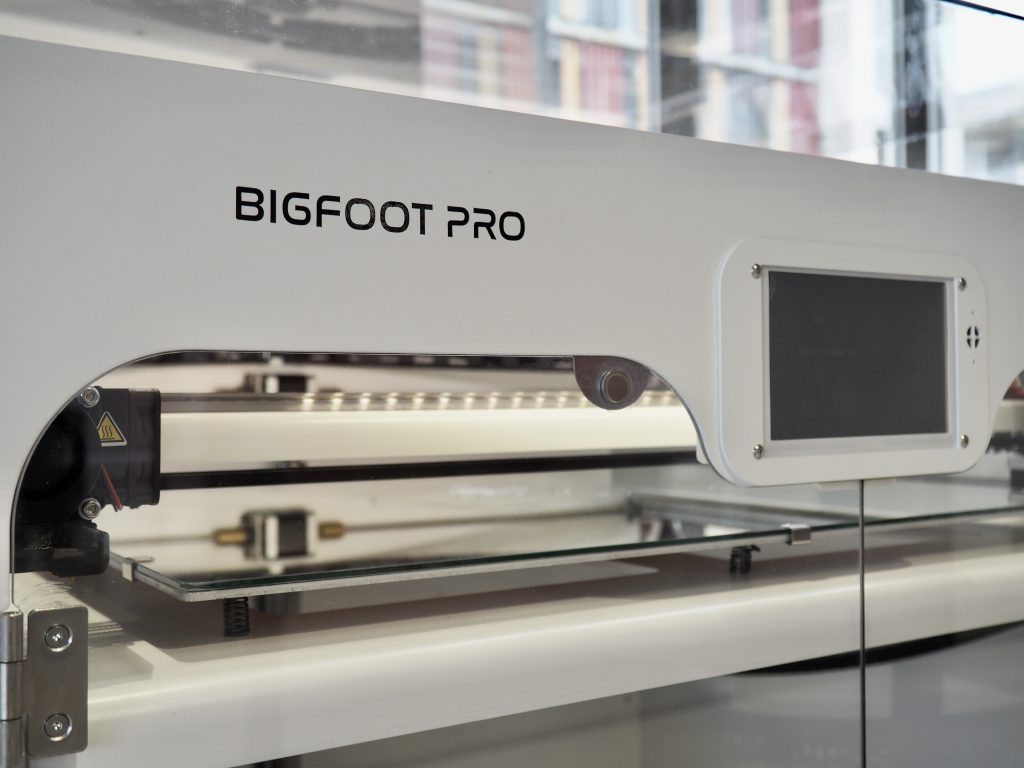
Main Benefits of Additive Manufacturing with Pellets
- Cost reduction: pellets are cheaper than filaments and easy to find.
- Agility: material melting and extrusion is faster than with filament.
- Versatility: allows working with different materials, such as SEBS, TPU, reinforced polyamides, ceramics, or plastics like PLA, PP, PC, ABS, PEEK or PEI.
- Speed: production is continuous and there is no need to change spools.
- Sustainability: recycled materials can be reused and waste reduced, beyond the inherent savings of additive manufacturing.
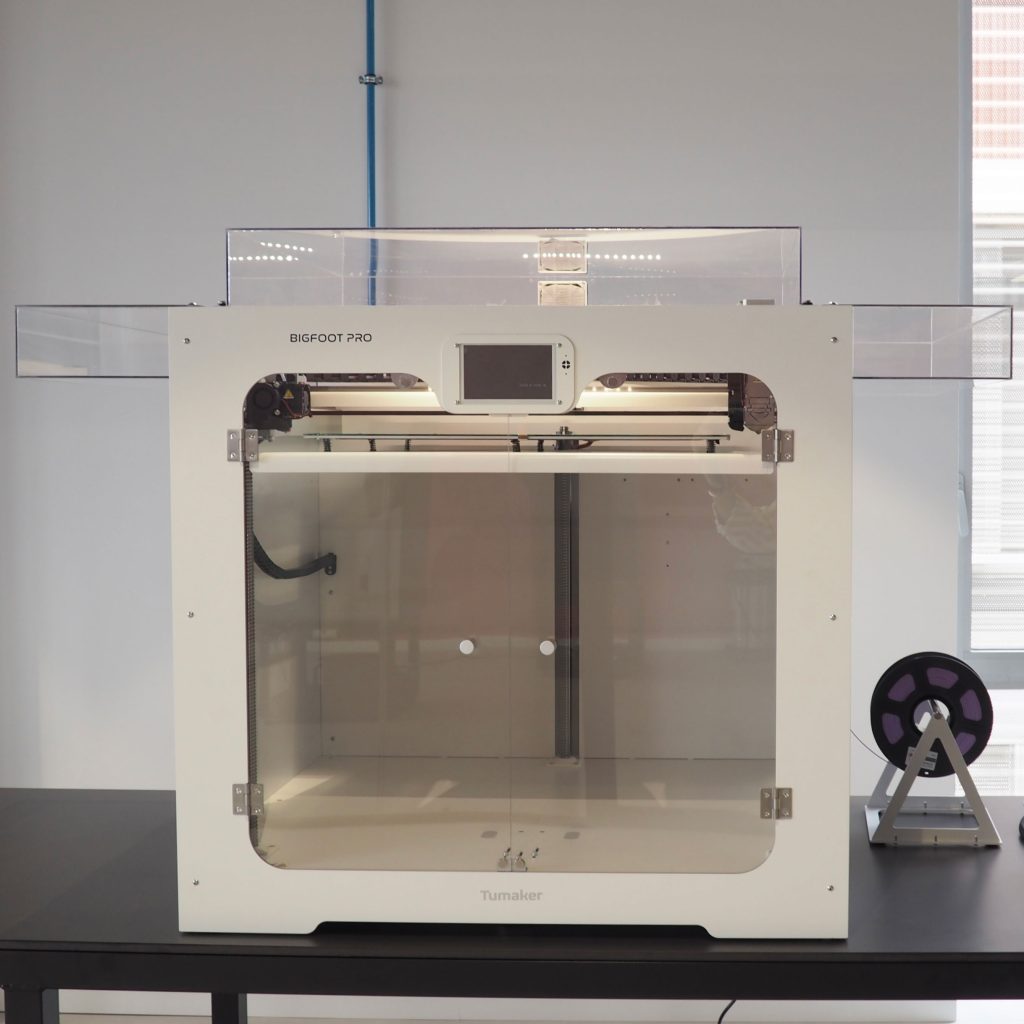
Applications at ThinkIn 3D
At ThinkIn 3D we use pellet printers to prototype and produce small parts. This allows us to validate designs before manufacturing costly moulds and to experiment with new materials without increasing costs.