In this day and age there are different industrial manufacturing technologies, each of which has specificities that make it more suitable for specific applications. Additive manufacturing is one more, but not the only one, and it is worth understanding them all to be able to have a global view. As all technologies, additive manufacturing in companies has its advantages and disadvantages.
Types of industrial manufacturing
In first place, subtractive manufacturing needs to be discussed. In these cases, the source is a block of material larger than the final geometry that you want to achieve. So, material is removed, selectively removing it, gradually creating the desired piece. Machining, electroerosion or cutting are examples of subtractive manufacturing.
In the case of conformal manufacturing, a matrix with the shape of the final geometry is used, in which material is introduced that gradually adapts to this shape. Some examples are injection moulding, forging or stamping, thermoforming or powder metallurgy.
Finally we have additive manufacturing, where the piece is created directly, adding material layer by layer. FDM, SLA or SLS are sub-technologies of 3D printing.
Advantages of additive manufacturing for companies
Although for some people 3D printing may seem like a total solution for industrial manufacturing, in reality, like any other technology, it has advantages and disadvantages compared to other traditional processes. Let’s start by looking at the advantges.
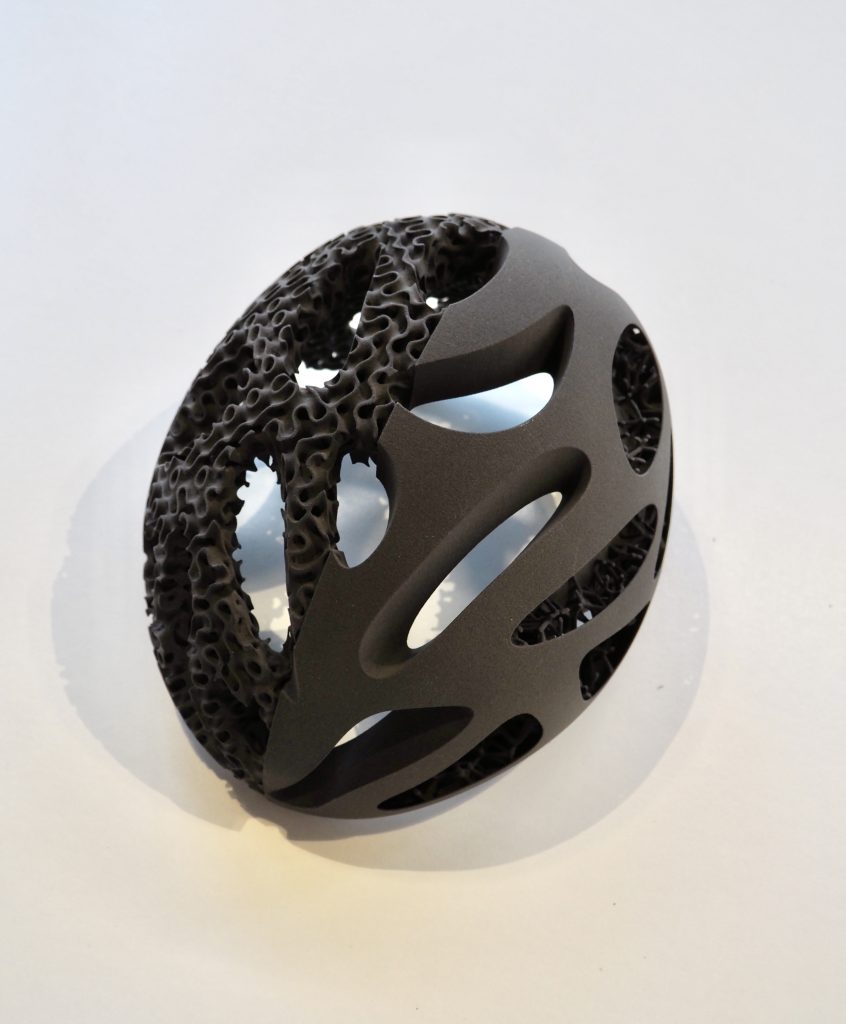
- Freedom in the design of complex pieces. Layer-by-layer fabrication enables complex geometries with minimal constraints, ideal for customized or application-specific components without increasing costs.
- Functions integration. Multiple functions can be combined into a single part, eliminating assembly and resulting in lighter, stronger, and more durable components.
- Customization: Enables fully tailored parts with specific dimensions, functionalities, and textures, opening new possibilities in sectors like interior design and fashion.
- Lighter products: Topology optimization and generative design reduce material while maintaining or improving performance, resistance, and durability.
- Multi-material products: Some technologies combine materials in one build, enabling enhanced properties (e.g., carbon fiber reinforcement) or varying colors and hardness.
- Fast set-up: No need for molds or complex setups; printers can produce parts quickly, often within hours, without specialized tooling. (Equipments – ThinkIn 3D)
- Cost and Bug reduction: 3D printing enables the creation of single-piece products, reducing the need for assemblies and minimizing production errors. It also lowers costs by allowing on-demand, custom tooling and reducing storage and intermediate processes.
- New designs time-to-market reduction. 3D printing accelerates product development by speeding up prototyping and iteration cycles. This drives its adoption as a final manufacturing technology. Today, it is already used to produce end-use parts such as dental devices, custom eyewear, and personalized insoles.
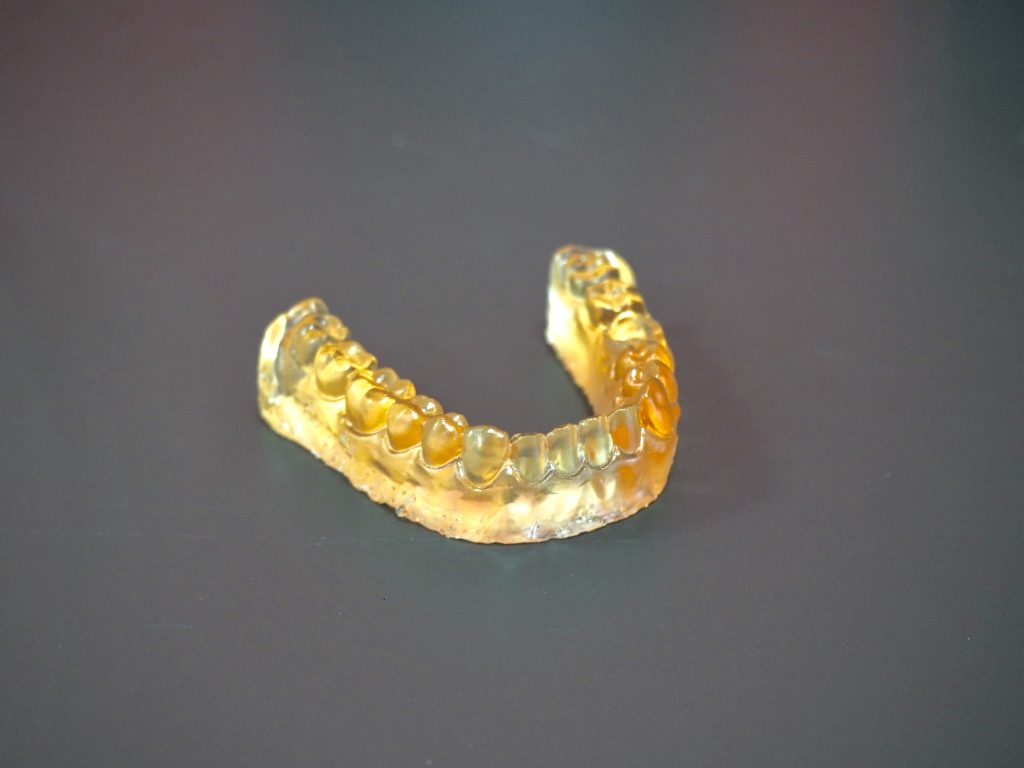
For current examples, you can see news in 3D Printing Industry.
Disadvantages of additive manufacturing in companies
As we said, although 3D printing is being revolutionary in many aspects, but it also has some drawbacks. It’s time to explore some of the most common problems with this technology.
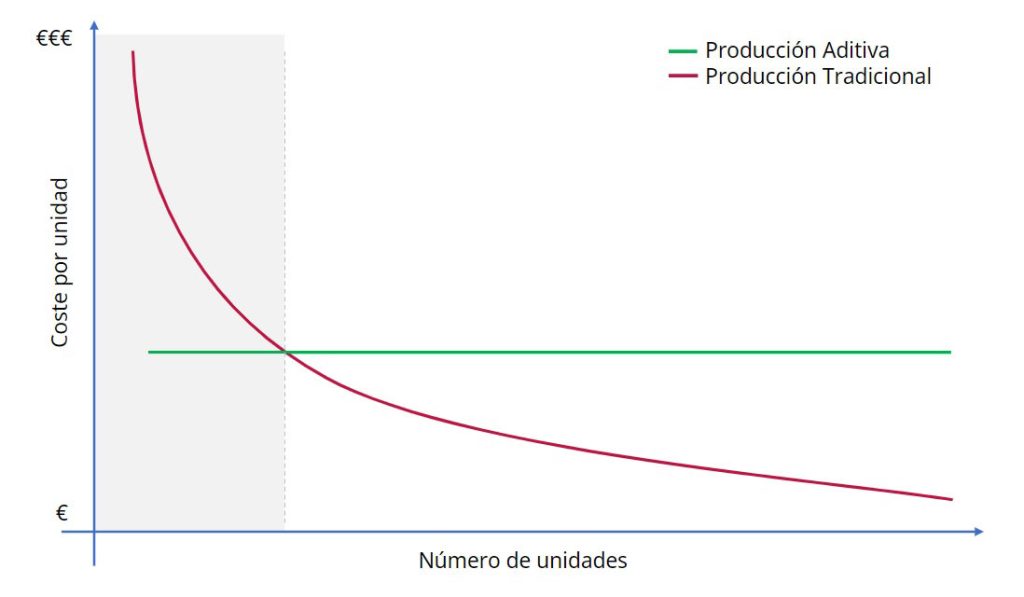
- Unsuitable for large production series: The investment in injection molds is amortized in the manufacture of large volumes of pieces. In contrast, the unit cost per piece with additive manufacturing always remains the same.
- Little variety of production materials. The range of options that this technology has in both metals and other materials is great. But it is still not comparable to what can be done with substative and conformative manufacturing.
- Surface finish of the pieces and manufacturing speed. The layer-by-layer manufacturing process ends up affecting the surface aesthetics of the piece. The solution, which would be to reduce the thickness of the layer, directly affects the total manufacturing time, extending it.
- Product quality and process repeatability: 3D printing cannot always ensure reliability in process repeatability. What does it mean? That the pieces do not always have the same quality. This problem has an impact on the physical properties of the parts (elasticity or hardness, for example) and this makes it difficult to obtain production certification in areas such as the medical or aeronautical sectors.
- Pieces’ size limitation The volume of the final piece will be linked to the printing volume. This means we are limited by the size of the 3D printer.
- Equipment cost and productivity. Currently the cost of industrial 3D printing machines is high, and this affects the price of the final piece. As the application of each additive manufacturing technology becomes more widespread, the forecast is that this cost will be reduced.
When will we use subtractive or additive manufacturing in companies?
Generally speaking, manufacturers tend to use 3D printed pieces to create custom products. They do it with low production volume, or to manufacture out-of-stock parts. Instead, they opt for subtractive processes in metal when creating high production volumes or parts that require other mechanical properties.
However, both subtractive and additive manufacturing can be used in parallel and at different stages of product development and manufacturing to take advantage of the advantages of each process. For example, in the manufacture of prototypes the two types of manufacture are combined. Using both processes in parallel, a more complex final part can be created with better mechanical properties
First prototypes, whether only volumetric or functional, tend to be cheaper and faster to produce with 3D printing technologies such as SLA, SLS or FDM. They can also be combined with CNC produced metal parts.
Some specific examples in which both technologies can be used in a complementary way are the tooling production, fastening and fixing devices, supports, molds and stamping patterns.